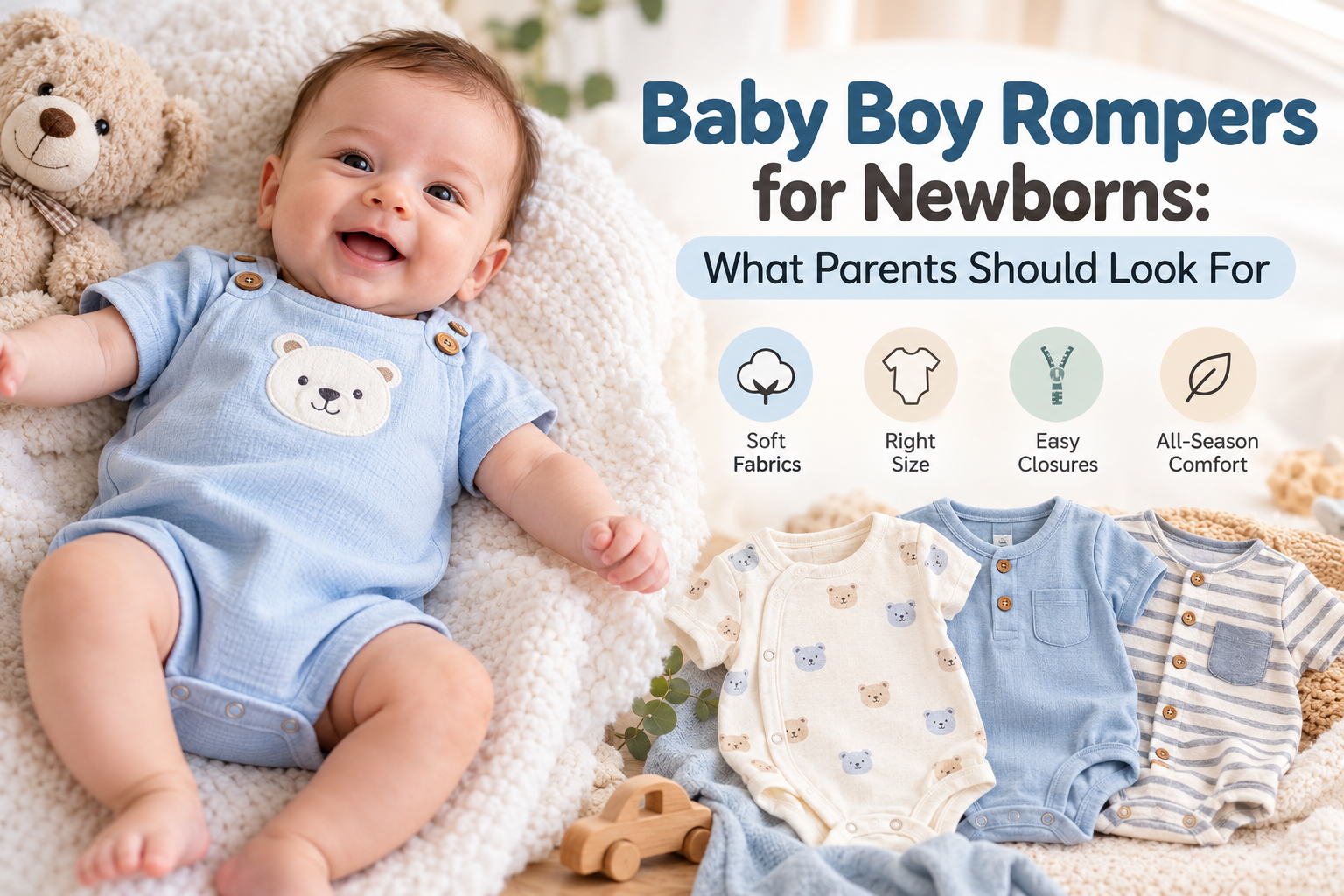
Choosing clothes for a newborn is about more than finding an adorable outfit. Newborns have delicate skin, need frequent diaper changes, and spend much of their time sleeping, feeding, and being carried. Their clothing should make these everyday activities easier while keeping them comfortable throughout the day.
Baby boy rompers are a practical choice for new parents because they combine a top and bottom in one garment. They are easy to style, convenient for everyday wear, and available in different fabrics, sleeve lengths, colours, and designs. However, not every romper is suitable for a newborn. Fabric quality, sizing, closures, stitching, and ease of dressing are important factors to consider before making a purchase.
If you are shopping for newborn clothing, this guide explains what to look for when buying baby boy rompers, how to choose the right size, which materials work best, and how to select options that offer comfort and practical value. With thoughtfully designed baby clothing from brands such as KayoBaby, parents can focus on the features that matter most when building their newborn's wardrobe.
Why Are Baby Boy Rompers a Practical Choice for Newborns?
Newborns require clothing that supports their daily routine without creating unnecessary complications for parents. Rompers offer several practical advantages because they combine multiple clothing pieces into one.
1. Convenient for Everyday Dressing
Newborns cannot support their heads independently during the early weeks, so dressing them requires gentle handling. A well-designed romper with a wide neck opening, front opening, or easy-access fasteners can make changing clothes simpler.
Parents do not need to coordinate a separate top and bottom, which also makes rompers a convenient choice for everyday outfits.
2. Comfortable for Sleeping and Resting
Newborns spend a large part of the day sleeping. Soft, breathable clothing with a comfortable fit can help prevent unnecessary irritation while they rest or move their arms and legs.
For sleep, choose an appropriately sized, lightweight romper without loose accessories or restrictive features. A regular romper is not automatically suitable sleepwear, so check its intended use and follow safe-sleep guidance.
3. Useful for Multiple Everyday Activities
Baby boy rompers can work well for several situations, including:
- Daily wear at home
- Short outings with parents
- Visiting family members
- Supervised playtime
- Layering during cooler weather, when appropriate
The best choice depends on the weather, the baby's age, and how frequently the outfit will be changed.
What Should Parents Look for When Buying Baby Boy Rompers for Newborns?
Before choosing a design or colour, focus on the practical features that affect your baby's comfort and your daily routine.
1. Choose Soft and Breathable Fabrics
Fabric is one of the most important considerations when buying newborn clothing. A baby's skin can be sensitive to rough seams, stiff materials, and irritating labels. Breathable fabrics also help manage warmth during everyday wear.
Cotton is a popular choice for newborn rompers because it is generally soft, comfortable, and easy to maintain. Lightweight cotton can be particularly useful in warm weather, while slightly thicker fabrics may be appropriate for cooler conditions.
When comparing fabrics, consider the following:
- Cotton: A practical option for everyday wear because of its softness and breathability.
- Organic cotton: May appeal to parents who prefer cotton produced under certified organic standards. Check the product's certification rather than relying on the label alone.
- Cotton blends: Can provide different levels of stretch, depending on the composition. Check whether the fabric feels comfortable and allows easy movement.
- Fleece or thicker fabrics: Better suited to certain cooler-weather situations, but may be too warm for indoor use in hot conditions.
Avoid choosing a romper based only on how soft it looks in product photographs. Read the fabric composition and care instructions before ordering baby clothes online.
2. Select the Correct Newborn Size
One common mistake is buying a romper based only on the baby's age. Clothing sizes vary between brands, and newborns differ in length, weight, and body proportions.
A romper that is too tight may restrict movement, while an oversized garment can bunch up or create unnecessary fabric around the body.
Before purchasing baby boy rompers, check:
- The brand's age and weight recommendations
- The garment's length and chest measurements, if available
- The fit around the neck, arms, thighs, and crotch
- Whether the design allows comfortable movement
- The brand's exchange or return policy
If your baby is between sizes, compare the actual measurements and the intended fit rather than automatically choosing the larger size.
Keep in mind that a newborn can outgrow clothing quickly. Buying a small number of well-fitting newborn outfits and adding the next size as needed can be more practical than purchasing too many pieces in advance.
3. Check the Closure and Fastening Design
Newborns need frequent diaper changes, sometimes several times a day. The fastening system can make a significant difference to convenience.
Common options include:
Snap-button rompers: Snaps along the crotch or front can provide convenient access for diaper changes. Check that they are securely attached and do not create uncomfortable pressure against the skin.
Zipper rompers: Zippers can make dressing quicker, especially when the garment opens fully at the front. Look for a secure zipper guard or fabric protection near the chin and neck.
Pull-on rompers: These can be simple to wear, but a sufficiently wide neck and flexible openings are important for dressing a newborn gently.
Choose a design that allows you to change your baby's diaper without removing every layer of clothing. Always inspect fasteners before use and stop using garments with loose or damaged parts.
4. Look for Comfortable Seams and Finishing
Even a soft fabric may feel uncomfortable if the garment has rough seams or poorly finished edges.
When checking newborn rompers, pay attention to:
- Flat, smooth seams around the arms and legs
- Soft edges around the neckline
- Labels that do not scratch the neck
- Elastic that does not dig into the thighs
- Securely attached buttons and decorative elements
- A crotch area that allows natural leg movement
Avoid outfits with loose ribbons, detachable bows, beads, or other small decorative pieces that could present choking or entanglement hazards.
Simple designs are often practical for newborns because they reduce unnecessary details that may interfere with dressing or comfort.
Which Type of Baby Boy Romper Is Best for Different Needs?
The most suitable romper depends on when and where your baby will wear it.
Short-Sleeve Rompers for Warm Weather
Short-sleeve baby boy rompers are useful for warm days and comfortably heated indoor spaces. Lightweight fabric can help reduce overheating, although the appropriate clothing depends on the room temperature and the baby's needs.
Choose breathable material, avoid heavy layers, and check your baby's chest or back to assess whether they feel comfortably warm.
Full-Sleeve Rompers for Cooler Conditions
Full-sleeve rompers provide more coverage and may be useful in cooler environments. However, sleeve length alone does not determine warmth. Fabric thickness, room temperature, and additional layers also matter.
For outings, consider whether the garment can be layered comfortably without restricting movement. Remove extra layers when moving into a warm indoor environment.
Footed Rompers for Added Coverage
Footed rompers include built-in foot coverings, which can be convenient in cooler conditions. Check that the feet are not too tight and that the garment does not restrict leg movement.
Non-footed rompers offer more flexibility as your baby grows and may be preferable in warmer weather. They also make it easier to check the baby's feet and use suitable socks when needed.
Everyday Cotton Rompers
Cotton rompers are useful wardrobe basics because they can be worn at home, during supervised daytime activities, and on suitable outings.
Parents who want to build a practical newborn wardrobe can start with neutral colours and simple patterns. These are easy to coordinate with other baby essentials and can work for different everyday occasions.
How to Choose Baby Boy Rompers for Different Seasons
Weather should influence your choice of newborn clothing, especially because babies cannot regulate their body temperature as effectively as older children.
Summer
For hot weather, prioritise lightweight, breathable materials and simple designs.
Look for:
- Short sleeves or sleeveless styles where appropriate
- Lightweight cotton fabric
- Comfortable openings that do not feel restrictive
- Minimal decorative layers
- Easy-care materials for frequent washing
Avoid overdressing your newborn. Babies should be monitored for signs of overheating, and clothing should be adjusted according to the environment.
Winter
During colder weather, choose appropriately warm clothing and add layers as needed.
Full-sleeve rompers and suitable layers can provide additional coverage. For outdoor trips, consider the temperature and duration of the outing. Remove bulky outerwear before placing a baby in a car seat, because thick padding can interfere with harness fit.
Do not rely on a thick romper alone to determine whether your baby is warm enough. Check the baby's temperature and comfort regularly.
Monsoon and Humid Weather
During humid weather, lightweight fabric and quick-drying laundry routines can be especially useful. Keep spare clothing available if your baby becomes damp from perspiration, spills, or diaper leaks.
Make sure washed garments are completely dry before storage or use, and avoid leaving a baby in damp clothing for extended periods.
How Many Newborn Rompers Should You Buy?
The ideal number depends on your laundry routine, the weather, and how often your baby needs a change of clothes.
A practical starting point is to keep around five to eight everyday outfits, including rompers, and adjust the number based on your household's needs. This is a planning suggestion rather than a fixed requirement.
Newborns may need frequent outfit changes because of spit-up, diaper leaks, or feeding spills. However, buying too many garments in the smallest size can lead to unused clothing if your baby grows quickly.
To build a balanced collection:
- Start with a few everyday rompers in the newborn size.
- Choose different sleeve lengths if the weather varies.
- Keep one or two spare outfits in your diaper bag.
- Buy additional sizes as your baby grows.
- Consider how frequently you can wash and dry clothing.
When shopping with a budget in mind, prioritise versatile, comfortable garments over a large collection of outfits intended for occasional photographs.
What to Check Before Buying Baby Boy Rompers Online
Shopping online makes it easier to compare colours, designs, and prices, but it also means you cannot inspect the fabric or fit in person.
Before placing an order, review the following details.
Read the Product Description Carefully
Check the fabric composition, size recommendations, sleeve style, fastening type, and care instructions. If measurements are not provided, consider contacting the seller for clarification.
Product photographs can help you assess the design, but they cannot reliably establish fabric thickness, softness, or durability.
Compare the Total Cost
The lowest listed price does not always represent the best value. Compare the garment's material, construction, expected use, and care requirements alongside its price.
If you are purchasing a multipack, check how many pieces are included and whether all garments have the same design and size.
Also review shipping charges, delivery estimates, and return or exchange conditions before completing your order.
Review Washing Instructions
Newborn clothes need regular washing. A romper that requires complicated care may be less practical for daily use than one that can be washed according to straightforward instructions.
Check whether the garment requires a specific washing temperature, gentle detergent, or special drying method. Follow the manufacturer's instructions to help maintain the fabric and fastenings.
Examine the Seller's Policies
Before buying from KayoBaby or another babywear retailer, review the available product information, size guide, delivery details, and return policy.
If you are purchasing newborn clothes as a gift, check whether exchanges are possible in case the selected size does not fit.
These checks help reduce uncertainty and make online shopping more convenient.
Common Mistakes to Avoid When Buying Newborn Rompers
Even attractive baby clothes may not be the most suitable choice for everyday use. Avoid these common purchasing mistakes.
Choosing Style Over Comfort
Bright colours, prints, and cute designs can be appealing, but the fabric, fit, and construction deserve greater attention. Choose decorative details only when they are securely attached and do not create safety concerns.
Buying Too Many Clothes in One Size
Newborns grow quickly, and sizing differs between brands. Purchase a manageable number of outfits before investing heavily in a particular size.
Ignoring the Weather
A thick, full-sleeve romper may be unsuitable for a hot afternoon, while a lightweight outfit may not provide sufficient coverage in a cold environment. Match clothing to the temperature and adjust layers as needed.
Overlooking Diaper Access
A romper that is difficult to open can make frequent diaper changes more complicated. Check the fastening position and opening size before purchasing.
Assuming Every Romper Is Suitable for Sleep
Ordinary daytime rompers are not necessarily designed for sleep. For sleeping, follow current safe-sleep guidance, use appropriately sized sleepwear, and avoid loose blankets and clothing that could cover the baby's face.
How KayoBaby Fits Into Your Newborn Clothing Search
When shopping for baby boy rompers, it helps to evaluate products based on practical needs rather than choosing a garment simply because it looks attractive.
KayoBaby is a brand to consider while comparing newborn clothing options. Before selecting a romper, check the individual product's fabric composition, sizing information, fastening design, and care instructions.
Parents can use the following checklist when comparing available options:
- Does the garment use a comfortable, breathable fabric?
- Is the newborn size suitable for the baby's measurements?
- Are the seams and edges smoothly finished?
- Can the romper be opened easily for diaper changes?
- Are all fasteners and decorative elements secure?
- Is the garment suitable for the intended weather and activity?
- Are the price, delivery terms, and return policy acceptable?
Comparing these details helps you select baby clothing that suits your family's routine and budget. Rather than relying on appearance alone, make the final decision based on the features and specifications provided for each KayoBaby product.
Frequently Asked Questions About Baby Boy Rompers
1. Which fabric is best for baby boy rompers for newborns?
Cotton is a popular choice because it is generally soft and breathable. Lightweight cotton may be suitable for everyday wear in warm conditions. Always check the fabric composition, stitching, and care instructions before purchasing.
2. What size baby boy romper should I buy for a newborn?
Check the brand's size chart and compare its weight, length, and garment measurements with your baby's measurements. Age labels are only a guide because newborns vary in size and clothing brands use different sizing standards.
3. Are baby boy rompers suitable for everyday wear?
Yes, appropriately sized rompers can be convenient for everyday activities because they combine a top and bottom in one garment. Choose comfortable fabrics, easy fastenings, and a design suitable for the weather.
4. Are short-sleeve or full-sleeve rompers better for newborns?
Neither is always better. Short sleeves may suit warm conditions, while full sleeves can provide additional coverage in cooler environments. Choose based on the temperature and avoid excessive layering.
5. How many rompers does a newborn need?
Around five to eight everyday outfits can be a reasonable starting point, depending on how frequently you do laundry and how often your baby needs clothing changes. You can add more as required.
6. Are zip-up rompers better than snap-button rompers?
Both can be convenient. Zippers may make dressing quicker, while snaps can provide practical diaper access. Look for secure fastenings and protective features that prevent the zipper or snaps from irritating the baby's skin.
7. How should I wash newborn baby boy rompers?
Follow the garment's care label, use a suitable detergent, and rinse thoroughly. Avoid strongly fragranced products if they irritate your baby's skin, and ensure clothing is completely dry before storing it.
8. What should I consider when buying baby boy rompers online?
Check the size chart, fabric composition, fastening type, product photographs, washing instructions, total price, delivery details, and return policy. These factors help you assess whether the garment suits your baby's needs before ordering.
Conclusion: Choose Baby Boy Rompers With Comfort and Convenience in Mind
Buying newborn clothing becomes easier when you know which features matter most. Soft, breathable fabrics, accurate sizing, comfortable seams, secure fastenings, and convenient diaper access can make baby boy rompers a practical addition to your baby's wardrobe.
Consider the season, your laundry routine, and how frequently your newborn may need a change of clothes. Avoid buying too many outfits in one size, and always check product specifications before placing an online order.
As you compare newborn clothing options, explore the available styles from KayoBaby and evaluate each garment for its material, fit, design, and everyday usefulness. Choose baby boy rompers that make dressing simpler, support comfortable movement, and suit your newborn's daily needs.
A thoughtful selection of everyday essentials can help you build a practical baby wardrobe without spending unnecessarily on features you may not need.