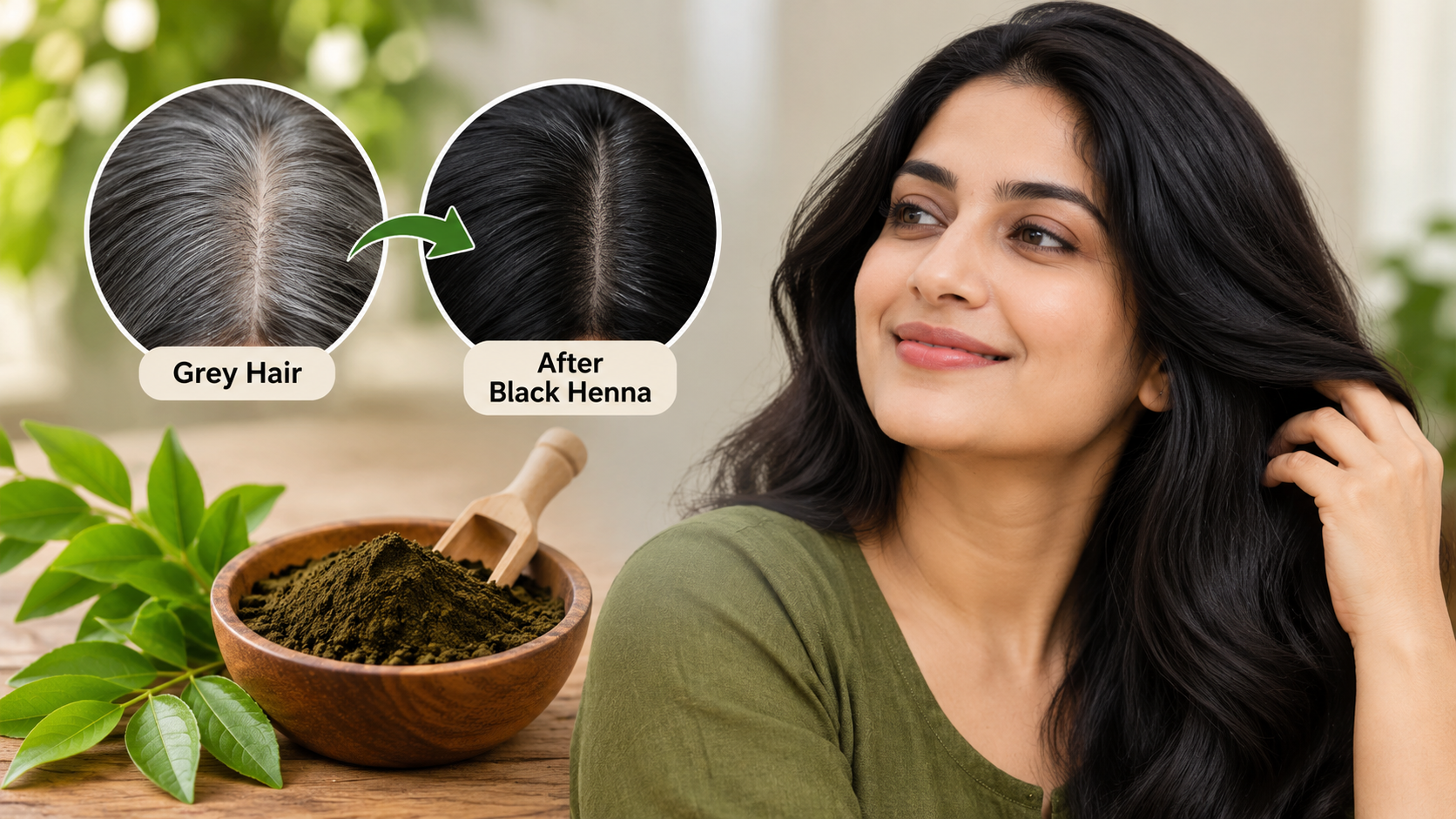
Grey hair is a natural part of ageing, but not everyone wants to leave their grey strands visible. Many people look for hair coloring options that provide darker coverage while fitting into their regular hair-care routine. Black henna is one option that attracts attention, particularly among people interested in traditional henna-based hair coloring products.
However, before choosing black henna for grey hair, it is important to understand how it works, what results to expect, which ingredients to check, and how to use it responsibly. Not every product marketed as black henna has the same formulation, and the final color can vary depending on the ingredients and the natural condition of your hair.
If you are considering black henna for covering grey hair, this guide explains the important factors to consider before purchasing and applying it.
Can Black Henna Cover Grey Hair?
Black henna products are marketed as a way to achieve darker hair color, including coverage for grey strands. However, their effectiveness depends heavily on the product formulation.
Pure henna, made from the leaves of the Lawsonia inermis plant, generally produces orange, copper or reddish-brown stains rather than black. Products sold as black henna may contain additional coloring ingredients to produce darker shades. Some may contain indigo, while others may contain synthetic colorants such as para-phenylenediamine (PPD).
This distinction matters because the ingredients determine the coloring process, expected results and potential safety concerns.
If your main goal is to cover grey hair, check the product label carefully instead of assuming that every black henna product is plant-based or suitable for regular application.
Why Is Grey Hair More Difficult to Color?
Grey hair can respond differently to coloring products compared with naturally pigmented hair. This is because grey strands contain less or no melanin, the pigment responsible for natural hair color.
Several factors can influence how color appears on grey hair:
1. Different Hair Texture
Some grey strands become coarser, drier or more resistant to color application. This can make it harder to achieve an even appearance, especially when grey hair is mixed with darker strands.
2. Lack of Natural Pigment
Since grey hair has little or no natural melanin, the coloring product needs to deposit enough pigment to create the desired shade.
3. Uneven Color Absorption
Grey hair may absorb color differently across the scalp. For example, the hair around the temples may respond differently from the strands at the back of the head.
4. Existing Hair Color
If your hair has previously been colored, bleached or chemically treated, the final result may differ from the result on untreated hair.
For these reasons, choosing a suitable product and following its specific application instructions are important when coloring grey hair.
What Kind of Results Can You Expect from Black Henna?
The results depend on the actual ingredients used in the product.
A plant-based combination of henna and indigo can produce darker shades through a controlled coloring process. However, pure henna alone does not produce a natural black shade.
Some commercially available black henna products use synthetic colorants to achieve a darker finish. These formulations may provide different coverage and color durability.
Before purchasing, consider the following:
- Shade: Check whether the product is designed to produce black, dark brown or another shade.
- Grey coverage: Look for clear product information about its intended use on grey hair.
- Ingredients: Review the complete ingredient list rather than relying only on the product name.
- Application: Follow the recommended mixing and application process.
- Color consistency: Understand that results can vary with hair texture, previous treatments and the original hair color.
A small strand test can help you assess the expected color before applying a product to your entire head.
Black Henna vs Regular Henna for Grey Hair
Understanding the difference between regular henna and black henna can help you make a more informed purchasing decision.
Regular Henna
Regular henna is traditionally used to create reddish, orange or copper tones on hair. It is generally selected by people who prefer warm shades rather than a black finish.
Its suitability for grey hair depends on whether you are comfortable with the reddish color that may appear on lighter strands.
Black Henna
Black henna is a broader commercial product category that refers to products marketed for achieving darker hair shades.
Its formulation can vary significantly. Some products combine plant-derived coloring ingredients, while others contain synthetic dyes.
The important point is that the term black henna does not guarantee a particular ingredient composition.
If you prefer a plant-based coloring approach, look for clearly labelled henna and indigo ingredients. If a product contains PPD or other oxidative dye ingredients, treat it as a chemical hair color product and follow its safety instructions.
Important Ingredients to Check Before Buying Black Henna
Ingredient transparency should be one of your main priorities when selecting a black henna product.
Here are some ingredients and formulation details worth understanding.
1. Lawsonia Inermis (Henna)
This is the botanical name for the henna plant. Its leaves contain lawsone, a natural coloring molecule that binds to hair.
Pure henna typically produces reddish-orange tones rather than black.
2. Indigo (Indigofera Tinctoria)
Indigo is a plant-derived coloring ingredient commonly used alongside henna to achieve brown or darker shades.
Depending on the application method and formulation, henna and indigo can be used in a two-step or combined process.
3. PPD (Para-Phenylenediamine)
PPD is a synthetic dye ingredient used in many oxidative hair coloring products. It can cause allergic contact dermatitis and, in some cases, serious reactions.
Some products marketed as black henna may contain high concentrations of PPD, particularly products intended for temporary skin staining. Never assume a black henna product is safe simply because it uses the word henna.
If you have experienced a previous reaction to hair dye, avoid experimenting with related products without professional medical advice.
4. Other Coloring Ingredients
Commercial hair color formulations may include additional dye compounds, developers and other ingredients.
Read the complete ingredient list and product instructions to understand what you are applying to your hair and scalp.
How to Choose the Right Black Henna for Grey Hair
Choosing a suitable product involves more than selecting the darkest shade available. You should consider your hair condition, coloring preferences and ingredient requirements.
Check the Complete Ingredient List
Avoid purchasing products that provide little or no information about their ingredients.
A reliable product listing should clearly identify the formulation, manufacturer details, usage instructions, warnings and quantity.
If you specifically want plant-based coloring, check that the formulation contains clearly identified botanical ingredients and does not rely on undisclosed synthetic dyes.
Consider Your Desired Color
Not everyone wants the same shade. Some people prefer a deep black finish, while others are more comfortable with dark brown.
Select a product based on its actual shade description and formulation rather than assuming every black henna product will deliver identical results.
Look at the Application Instructions
Some products require mixing with water, while others come ready to use or require a separate developer.
The preparation process can affect the final color. Always follow the instructions supplied with the specific product.
Check Packaging and Product Freshness
Hair coloring products should come in properly sealed packaging with visible manufacturing, expiry and batch information.
Avoid products with damaged seals, unclear labels or missing safety instructions.
Compare Price and Quantity
Price is another important purchasing factor, particularly if you have extensive grey hair or need to color your roots regularly.
Consider the following before comparing products:
- Net weight of the package.
-Number of applications possible.
- Whether additional ingredients or developers are required.
- Ingredient transparency.
- Brand and manufacturer information.
- Product instructions and customer support.
A lower-priced product is not necessarily better value if it provides insufficient quantity or unclear ingredient information.
How to Prepare Your Hair Before Applying Black Henna
Preparation can help you evaluate the product and reduce avoidable application problems.
Follow these practical steps:
Step 1: Read the Product Instructions
Check whether the product is suitable for your hair type and intended coloring purpose. Do not apply a product if its ingredient information or safety instructions are missing.
Step 2: Perform the Required Allergy Alert Test
For products containing PPD or other oxidative dye ingredients, follow the manufacturer's allergy alert test instructions exactly, generally 48 hours before each application.
A previous negative test does not guarantee that an allergic reaction will not occur later.
If you have previously reacted to hair dye, do not use PPD-containing products without medical advice.
Step 3: Perform a Strand Test
Apply the product to a small, hidden section of hair according to the instructions. This helps you assess the color outcome and how your hair responds.
A strand test is not a substitute for an allergy alert test.
Step 4: Protect Your Skin and Clothing
Use the protective measures recommended on the packaging. Avoid contact with the eyes, face and irritated or damaged scalp.
Step 5: Follow the Recommended Application Time
Do not leave the product on your hair longer than instructed in an attempt to achieve a darker shade. More application time does not necessarily mean better results and may increase the risk of irritation or other problems.
Common Mistakes to Avoid When Using Black Henna
Even a suitable hair coloring product can produce disappointing results when used incorrectly.
Here are some mistakes to avoid:
1. Assuming all black henna is natural: The name does not guarantee a botanical formulation. Always check the ingredients.
2. Ignoring allergy testing: Some coloring ingredients can cause serious allergic reactions. Follow the required testing instructions before use.
3. Expecting identical results on every hair type: Grey, previously colored and untreated hair may respond differently.
4. Mixing products without checking compatibility: Avoid combining black henna with other dyes, developers or treatments unless the manufacturer confirms compatibility.
5. Applying color to an irritated scalp: Do not use hair color on damaged, inflamed or sensitive skin.
6. Choosing products only because they are inexpensive: Ingredient transparency, packaging quality and clear instructions should matter more than price alone.
7. Reapplying too frequently: Follow the product's recommended application schedule instead of repeatedly coloring your hair to maintain a darker appearance.
Is Black Henna Suitable for Everyone?
No. The suitability of black henna depends on its ingredients and your individual circumstances.
People with sensitive scalps, previous hair dye allergies or chemically treated hair should be particularly careful.
You should also seek professional advice if you have experienced reactions to PPD, temporary black henna tattoos or other oxidative hair dyes.
If you are pregnant or breastfeeding, check the product's safety information and consult your healthcare professional before using a hair coloring product.
For anyone considering a plant-based alternative, a clearly labelled henna and indigo formulation may be worth exploring. However, plant-based does not automatically mean allergy-free.
Why Consider Reshma Beauty When Shopping for Henna Hair Products?
When purchasing henna-based hair products, customers should look beyond attractive packaging and promotional claims.
Reshma Beauty offers a range of beauty and henna-related products for people exploring different hair and skincare options.
Before selecting any black henna or hair coloring product from a beauty brand, take time to review:
- The complete ingredient information.
- Whether the formulation is plant-based or contains synthetic dyes.
- The shade and intended hair-coloring purpose.
- Application instructions and safety warnings.
- Package size and price.
- Manufacturing and expiry details.
These details help you determine whether a product matches your coloring preferences and hair-care requirements.
For shoppers comparing different henna products, checking the product specifications and ingredient information is a practical starting point.
Frequently Asked Questions About Black Henna
1. Does black henna cover grey hair completely?
Coverage depends on the product's formulation, application method and the condition of your hair. Some products are designed for grey coverage, but results are not guaranteed to be uniform. Always check the product claims and perform a strand test.
2. Is black henna better than regular henna for grey hair?
It depends on your desired shade. Regular henna generally produces reddish or copper tones, whereas products marketed as black henna are designed for darker shades. Their ingredients can differ considerably, so compare formulations before choosing.
3. Can black henna turn grey hair naturally black?
Pure henna does not produce a black shade. Darker plant-based results generally involve indigo alongside henna. Some commercial black henna products use synthetic dyes to achieve black color.
4. How long does black henna last on grey hair?
Color longevity depends on the formulation, hair condition, washing frequency and maintenance routine. Plant-based and synthetic coloring products may behave differently. Follow the manufacturer's information for realistic expectations.
5. Is black henna safe for regular use?
There is no universal answer because black henna products have different ingredients. Products containing PPD can cause allergic reactions. Check the formulation, follow the required allergy alert testing instructions and avoid use if you have a known allergy.
6. Can I use black henna on chemically treated hair?
It depends on the product and previous chemical treatments. Some combinations may produce unpredictable color results. Perform a strand test and consult a professional before applying a new coloring product to chemically treated hair.
7. What should I check before buying black henna online?
Check the complete ingredient list, manufacturer details, product quantity, expiry date, shade information, application instructions and safety warnings. Avoid products with unclear formulations or unsupported claims.
8. Is plant-based black henna completely allergy-free?
No. Plant-derived ingredients can also cause allergic reactions in some people. A plant-based formulation should not automatically be considered allergy-free. Check the ingredients and follow appropriate product safety guidance.
Conclusion
Black henna can be an option for people looking for darker hair color and grey coverage, but the results depend on the actual formulation rather than the product name. Understanding the difference between pure henna, henna and indigo combinations, and synthetic black hair dyes is essential before making a purchase.
Before choosing a product, review its ingredients, shade information, application instructions and safety precautions. Avoid products with unclear formulations, and never skip the required allergy alert test or strand test.
If you are comparing henna-based hair coloring options, explore the range of products available at Reshma Beauty and carefully review their specifications to find an option that matches your hair-coloring preferences.